FRP reinforcement for heated floors
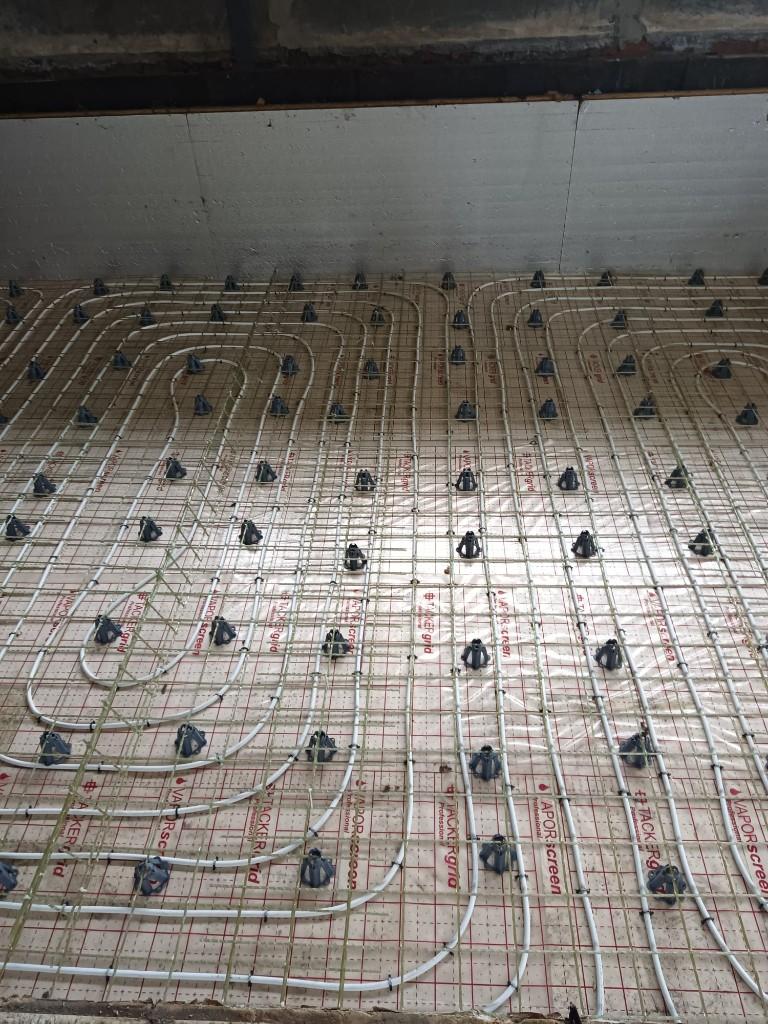
Lightweight, non-corrosive FRP mesh under underfloor heating: no rust from residual moisture, no electrical conductivity, and easier to place around the pipes.
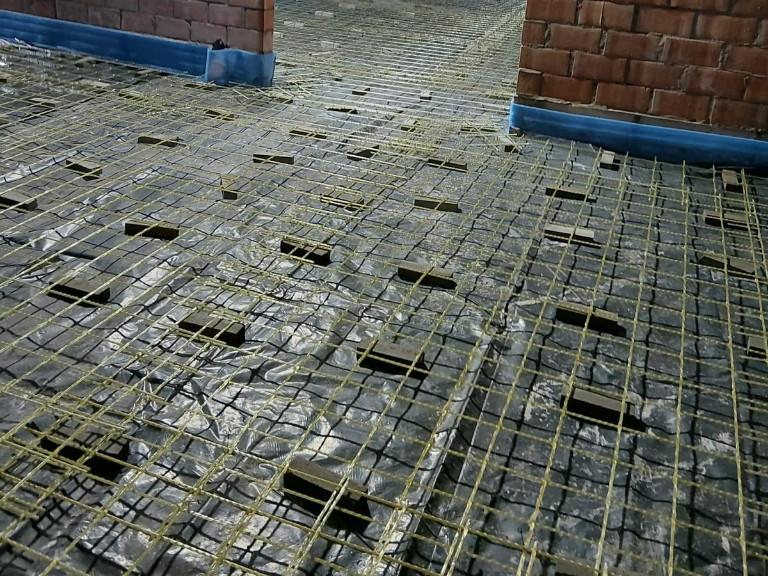
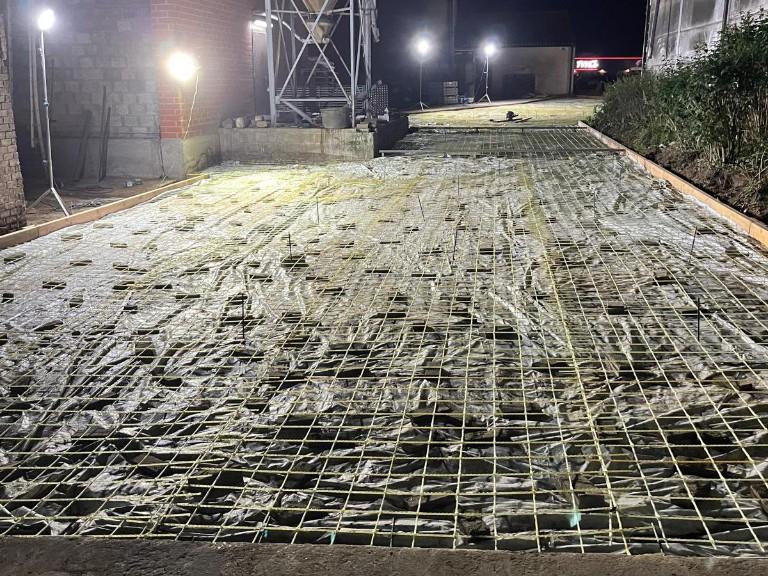
On heated-floor pours the reinforcement has to sit around a dense field of pipes, clips and chairs. FRP mesh is used here as a lightweight alternative to steel: it keeps the slab tied together without adding a rust risk next to the heating circuit.
The first practical gain is corrosion. Residual moisture in the screed, a slow leak or a damp slab will rust steel over time. GFRP does not corrode, so there is no rust staining and no corrosion point where cover is thin. That matters on slim floor build-ups, where you otherwise keep extra concrete just to protect the steel.
Weight is the second. FRP is much lighter than steel, so rolls and meshes can be laid out without walking the pipes flat or dragging a heavy grid across the circuit. Crews position the net by hand and keep the tube layout intact.
FRP is electrically non-conductive. On electric underfloor heating that removes a conductive grid from the floor build-up — no stray conduction or induction through the mesh. It is also non-magnetic, which helps when sensors, controls or other electronics sit in the same slab.
Thermally, longitudinal expansion of FRP sits relatively close to concrete. With a floor that heats and cools every day, that reduces the mismatch you get when a steel grid and the slab move at different rates.
On thin screeds FRP is useful because you do not need extra cover solely to keep the mesh from rusting. Structural cover still has to follow the design and the applicable standard — you simply drop the corrosion allowance that steel would have required.
Lightweight. Corrosion-free. Built for the heated slab.